
If multiple fixtures back up at once, drains gurgle when you run water somewhere else in the house, or you spot sewage near your cleanout, you're likely looking at a main sewer line clog, not just a stopped-up toilet. Stop running water in the house immediately. Locate your sewer cleanout, and if a public main might be involved, call your municipal utility before hiring a private plumber.
TL;DR:
- A main sewer line clog often causes multiple fixtures to back up or drain slowly simultaneously, unlike localized blockages affecting individual fixtures.
- Cross-fixture backups, gurgling sounds, sewage odors, and soggy yard patches are key signs that the problem lies in the main line rather than individual drain issues.
- Confirm a main-line clog by performing cross-fixture tests, locating and inspecting the cleanout, and ruling out vent stack blockages before calling a professional.
- Sewer camera inspections identify the exact cause of the clog, whether roots, grease buildup, or structural damage, which informs the most effective and efficient repair plan.
- Homeowners should immediately stop using drains, shut off the main water supply if severe, and call their municipal utility first, as many issues may sit in the public main and be free of charge to clear.
Table of Contents
- Sewer Line Clog Symptoms That Point to the Main Line
- How to Confirm It Safely Before Calling Anyone
- What to Do Right Now to Limit Damage
- What's Actually Causing the Clog
- Preventing the Next Main-Line Backup
- Why a Camera Comes Before a Quote
- A Homeowner's Priority List When Backups Start
- Get a Straight Answer With a Camera Inspection
- Where This Information Comes From
- Sources
- FAQ
Sewer Line Clog Symptoms That Point to the Main Line
A single slow drain almost always means a localized clog in that fixture's own trap or branch line. A main sewer line clog behaves differently because every fixture in your house eventually feeds into the same lateral pipe, so a blockage there affects everything downstream at once.
Here's what separates a main-line problem from a minor annoyance:
- Multiple fixtures acting up together. If your kitchen sink, bathtub, and toilet all drain slowly or back up around the same time, the shared line is compromised, not each fixture individually.
- Cross-fixture backups. Flush the toilet and watch water rise in the shower drain. Run the washing machine and see the toilet bubble or fill. This is one of the clearest signs of a main sewer line problem, because unconnected fixtures shouldn't affect each other.
- Gurgling and bubbling sounds. Air trapped behind a blockage has to escape somewhere, and it often pushes back up through drains or the toilet bowl. Toilet gurgling when the washer drains is a textbook early warning, and louder, more frequent gurgling usually means the clog is getting worse.
- Sewage odors or standing water at the cleanout. A rotten-egg smell near a floor drain or an outdoor cleanout cap is a strong signal that wastewater has nowhere left to go.
- Wet, spongy, or unusually green patches in the yard. If the grass along the path from your house to the street looks greener or the ground feels soggy without recent rain, wastewater may be leaking from a cracked or blocked lateral underground.
Any one of these on its own deserves attention. Two or three together mean you're almost certainly dealing with a main-line issue rather than an isolated clog.
How to Confirm It Safely Before Calling Anyone
You don't need special tools to narrow this down. A few careful checks at home will tell you whether the problem sits in one fixture or in the shared line everyone depends on.
- Run the cross-fixture test. Flush a downstairs toilet, then immediately check a nearby shower, tub, or floor drain for rising water or gurgling. Cross-fixture testing is the simplest way to tell a branch clog from a main-line clog, since a branch issue won't affect fixtures on a different line.
- Find your cleanout. It's usually a capped pipe near your foundation or in the yard along the path to the street. Loosen the cap slowly, standing to the side, since pressure can push wastewater out fast. Standing water right at the cap confirms a downstream blockage.
- Rule out a blocked vent stack. A clogged roof vent can cause similar gurgling without a true sewer clog. If your cleanout runs clear but drains still gurgle, the vent stack may be the actual culprit.
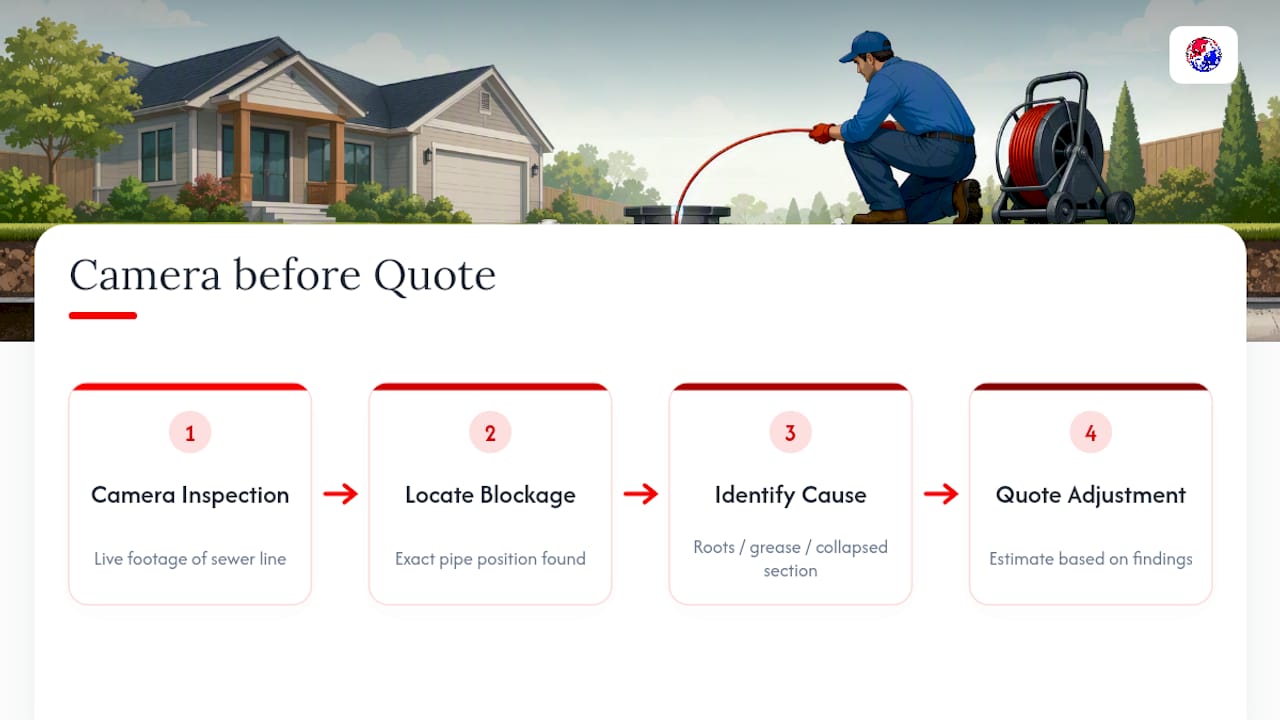
- Bring in a camera. A sewer camera inspection is the only way to see exactly what's happening inside the pipe: roots, grease, a collapsed section, or something flushed that shouldn't have been.
Pro Tip: Never remove a cleanout cap that's under pressure or bulging outward. If water or sewage is actively pushing against it, back away and call a professional instead of trying to relieve the pressure yourself.
What to Do Right Now to Limit Damage
Once you suspect a main-line clog, your next moves matter more than the eventual repair; for homeowners in rural or septic-system contexts, knowing how to sell a house with septic problems in Tennessee can be crucial if repairs become overwhelming.
- Stop using every drain in the house. Every flush or load of laundry adds more water to a system that's already backed up.
- Shut off your main water supply if backups are severe or sewage has reached a floor drain or basement.
- Leave pressurized cleanout caps alone. Forcing one open can spray wastewater.
- If sewage has reached living space, stop using the plumbing entirely and call a licensed professional right away, since raw sewage carries real health risks.
- Wash your hands and any exposed skin thoroughly if you've touched anything near a cleanout or backup.
- Call your municipal utility first. Many utilities will inspect and clear the public main at no charge, which can save you a private service call if the blockage sits in the city's line rather than yours.
What's Actually Causing the Clog
Not every main-line clog comes from the same source, and the cause usually determines both the fix and how urgent it is.
- Tree roots work into small pipe cracks searching for moisture and nutrients, and they can grow enough to fully block a line within a year or two. Expect recurring backups even after a root is cut, since regrowth is common without follow-up repair.
- Grease and mineral scale build up slowly along pipe walls, narrowing the passage over months. Hydro-jetting clears this buildup effectively, but it won't fix a structurally damaged pipe.
- Flushed nonflushables, wipes, paper towels, hygiene products, tend to cause sudden, complete blockages that need mechanical removal rather than a chemical fix.
- Structural failure, like a bellied or collapsed section of pipe, causes repeat backups no matter how often the line is cleared, and only a camera inspection reveals it.
Preventing the Next Main-Line Backup
A little discipline in the kitchen and bathroom goes a long way toward keeping your line clear. Keep wipes, paper towels, and grease out of your drains entirely, use a grease bin instead of the sink, and skip flushing anything but toilet paper.
- Schedule a professional inspection every couple of years, sooner if you've had backups before or live in an older home with clay or cast-iron piping.
- Think carefully before planting trees near your lateral line, since roots follow moisture straight to the pipe.
- Don't ignore a single slow drain that lingers for more than a few days. Catching a partial clog early is far cheaper than dealing with a full backup. A routine home maintenance mindset that treats plumbing checkups like any other seasonal task tends to catch these problems before they become emergencies.
Why a Camera Comes Before a Quote
After 38-plus years working on New Mexico homes, we've learned that guessing at a sewer problem costs homeowners more than diagnosing it properly. A camera inspection shows exactly where the blockage sits and what caused it, root intrusion, grease, or a collapsed section, before anyone recommends digging up your yard. That footage often changes the quote entirely, sometimes for less work than expected, sometimes for more. The company talks you through what the camera actually shows, not just what a repair will cost.
A Homeowner's Priority List When Backups Start
Call your city utility first, photograph any damage for your insurance file, and get a camera inspection before agreeing to major excavation work. Check your policy for a buried utility endorsement beforehand, not after.
— Aaron Waller, General Manager
Get a Straight Answer With a Camera Inspection
This company skips the guesswork that turns a simple clog into an unnecessary excavation bill. Instead of quoting a repair before anyone's actually seen inside the pipe, they run a camera inspection first, then talk you through exactly what it shows and what it will take to fix it, with direct conversations with local experts familiar with regional pipes and soil conditions.
If you're dealing with slow drains that keep coming back, or you've already spotted the warning signs of a main-line clog, don't let it sit until it turns into a backup in your living room. Check out how we handle water heater and plumbing diagnostics across the systems in your home, and reach out to schedule a camera inspection before a small problem becomes a major excavation project.
Where This Information Comes From
- GEICO on sewer line insurance coverage
- Progressive on buried utility endorsements
- AlertPlumber on sewer line problem signs
Sources
- Does homeowners insurance cover sewer line replacement? | GEICO
- Signs of a Sewer Line Problem | AlertPlumber
- Main sewer line clog? Homeowners: find cleanout, call city first | USA Plumbing & Septic blog
FAQ
Can You Clear a Main Sewer Line Clog Yourself?
Minor branch clogs sometimes respond to a plunger or a basic drain snake, but a true main sewer line clog usually needs professional equipment. Opening a pressurized cleanout or attempting a DIY snake on the main line risks spraying sewage and rarely reaches roots or structural damage deep in the pipe.
How Do You Clear a Blocked Sewer Line?
Professionals typically start with a camera inspection to find the exact cause and location, then choose between mechanical snaking, hydro-jetting for grease and scale buildup, or trenchless repair for structural damage. The method depends entirely on what the camera shows, which is why diagnosis always comes before treatment.
Does Homeowners Insurance Cover a Sewer Line Break?
Standard homeowners insurance typically does not cover sewer line damage from roots, corrosion, or normal wear, since those are considered maintenance issues rather than sudden accidents. Coverage usually requires adding a buried utility or service-line endorsement, and even then, payout often depends on whether the damage was sudden rather than gradual.
How Long Does It Take a Plumber to Unclog a Main Sewer Line?
Simple mechanical snaking often finishes within 1 to 3 hours, while hydro-jetting combined with a camera diagnosis typically runs 2 to 4 hours on-site. Major repairs involving excavation or pipe replacement can stretch across several days, which is one reason getting a camera inspection first matters so much for setting realistic expectations.