

A whole house repipe replaces every hot and cold supply line, along with the stops and connections feeding your fixtures, so leaks stop for good and water pressure and quality come back to normal. Most homeowners use PEX or copper, and a typical job runs within a broad cost range depending on size, material, and access, according to PermitDeck's repipe cost breakdown.
TL;DR:
- Replacing all supply lines with PEX or copper typically costs between $4,500 and $15,000, with labor constituting about 70 percent of the total expense.
- Homes older than 40 years or with materials such as polybutylene, corroded galvanized steel, or copper with pinhole leaks are prime candidates for a full repipe.
- Signs of failing pipes include discolored water, metallic tastes, pressure drops, staining around fittings, or water smells indicating corrosion or mineral buildup.
- A repipe usually takes two to four days for single-story homes with accessible attics or crawlspaces, but costs and duration increase with home height and complexity.
- Ensuring proper permits, inspections, and a clear scope of drywall patch work is essential for compliance, resale value, and insurance considerations.
Table of Contents
- When Should You Consider a Whole House Repipe?
- What Signs Point to Failing Supply Pipes?
- How Much Does a Whole House Repipe Cost?
- PEX vs. Copper vs. CPVC: Which Material Makes Sense?
- What Does the Repipe Process Actually Look Like?
- How Long Does a Repipe Take and What Happens to Your Walls?
- Why Do Permits and Inspections Matter for a Repipe?
- Why Trust This Guide on Whole House Repiping?
- What Aaron Would Tell You Before You Sign a Bid
- Get a Written Repipe Estimate from a Local Team
- Where to Learn More Before You Get Quotes
- Sources
- FAQ
When Should You Consider a Whole House Repipe?
If you're calling a plumber every few months for the same kind of leak, you're not dealing with bad luck. You're dealing with pipe that's failing system-wide, and patching one spot just moves the clock forward until the next spot fails.
Certain materials make a full repipe almost inevitable: polybutylene, corroded galvanized steel, and copper riddled with pinhole leaks. Replacing that piping also clears up insurance and resale headaches, since some insurers flag polybutylene and galvanized systems as risk factors during underwriting or a home sale, per PermitDeck's guidance.
Ask yourself three questions before calling anyone:
- Have you had more than two unrelated leaks in the past two years?
- Is your home older than 40 years with its original piping?
- Does your water come out discolored or low pressure at multiple fixtures, not just one?
Pro Tip: Two or more "yes" answers usually mean spot repairs are just delaying a bigger bill. Get a repipe quote alongside any repair estimate so you're comparing real numbers, not guessing.
What Signs Point to Failing Supply Pipes?
Your fixtures usually tell the story before a pipe actually bursts. Rusty or brown water right after you turn on a faucet, a metallic taste, or pressure that drops when someone flushes a toilet are all classic warning signs of pipe failure.
Material matters, too:
- Gray polybutylene pipe, common in homes built between the 1970s and 1990s, is prone to cracking from the inside out.
- Threaded galvanized joints corrode and narrow over decades, which is why older homes lose pressure gradually.
- Copper with frequent pinhole leaks, especially in the same wall or ceiling area repeatedly, often points to aggressive water chemistry rather than one bad pipe.
If you're seeing staining around fittings or your water smells off, a home water quality assessment can confirm whether corrosion or mineral content is accelerating the damage.
How Much Does a Whole House Repipe Cost?
National pricing typically lands within a broad range, with labor making up a majority of that total according to Angi's cost analysis. That labor share explains why two quotes with similar material lists can still differ by thousands: one crew is budgeting for slab access and drywall repair, the other isn't.
The number that surprises most homeowners: labor, not pipe, drives most of your bill. Comparing material line items alone won't tell you why one bid costs twice another.
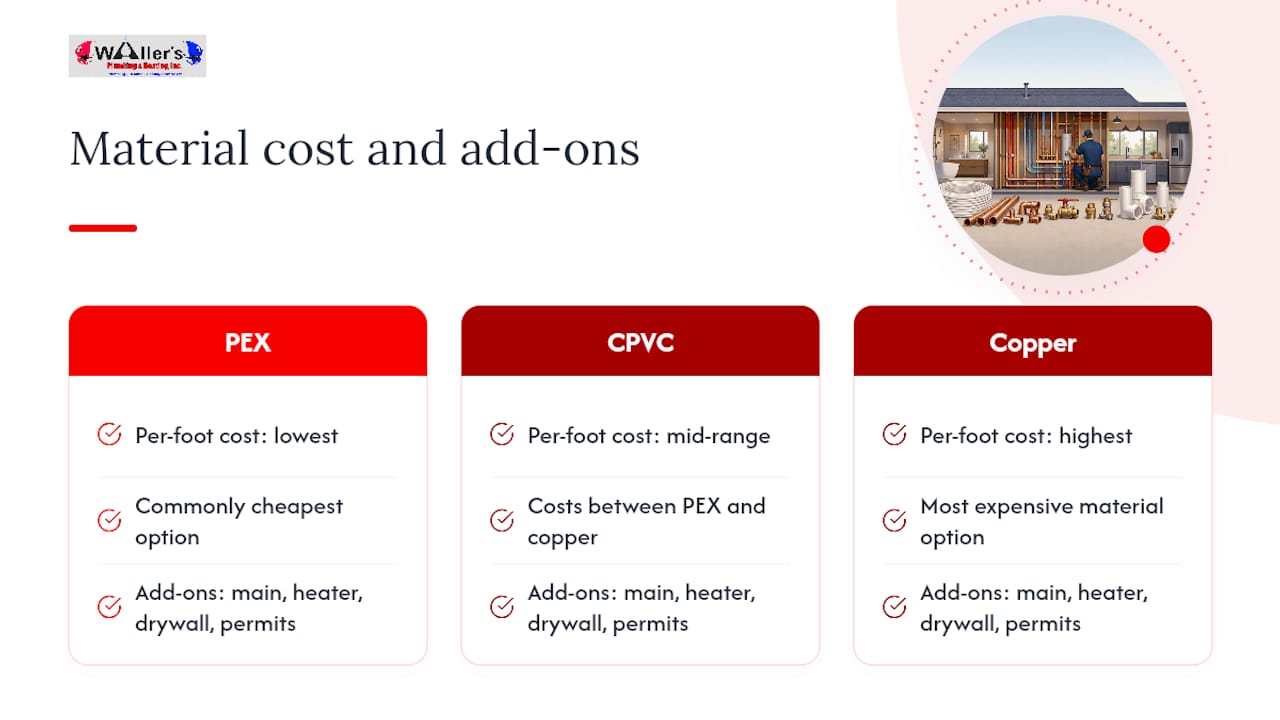
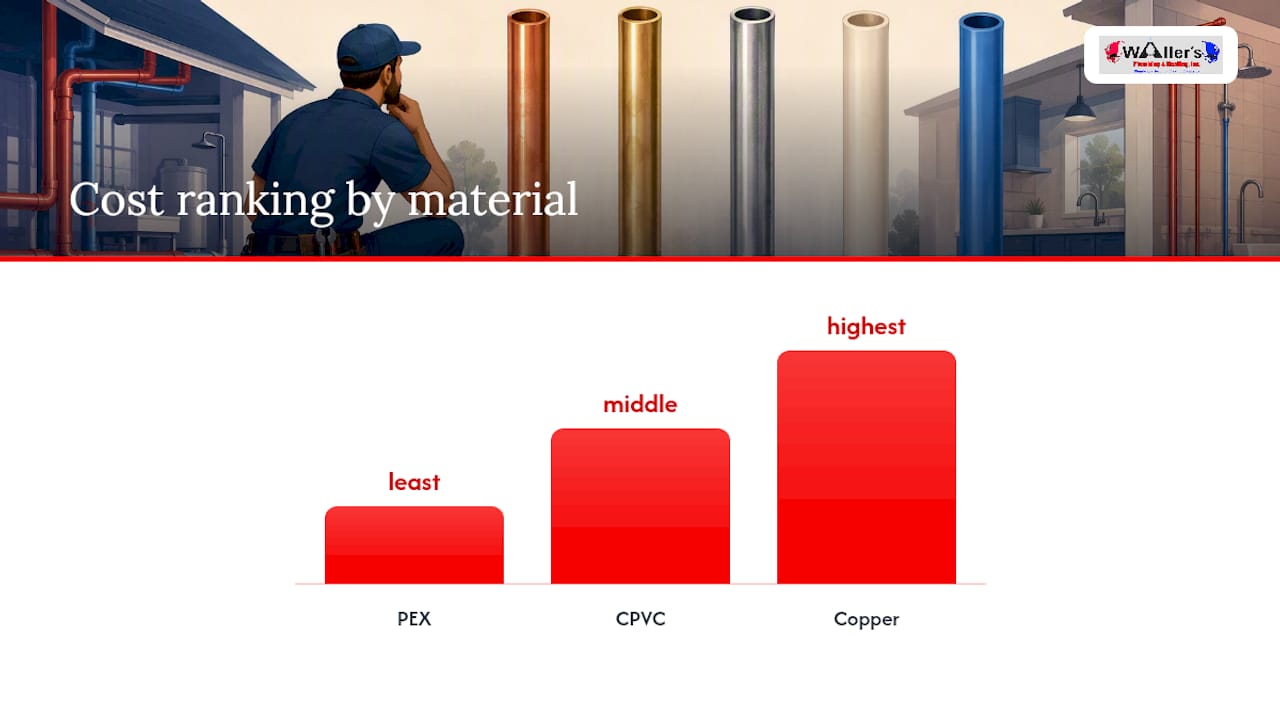
Material costs per foot vary, with PEX generally costing less than copper and CPVC prices falling in between, as detailed by Costto. Add-ons that push quotes higher include a water main replacement, a water heater swap, full drywall finish and paint, and permit fees, which vary by city.
PEX vs. Copper vs. CPVC: Which Material Makes Sense?
Every material trades off cost against durability, and the right pick depends on your budget and your home's layout.
- PEX flexes around corners without extra fittings, resists freeze cracking better than rigid pipe, and costs the least per foot, which is why most repipes today use it.
- Copper lasts decades in the right water chemistry and holds up well on exposed runs, but it costs more, takes longer to install, and can pit or pinhole if your water is acidic or has high mineral content.
- CPVC sits in the middle on price and handles heat well, though it's more brittle than PEX in a freeze.
Within PEX, installers commonly favor PEX-A over PEX-B for repipes because its expansion fittings and manifold layouts mean fewer joints and simpler future repairs, a point PermitDeck backs up in its technical guidance. Copper still makes sense if you prefer a metal system, have favorable water chemistry, or want exposed runs that look finished without extra insulation.
Pro Tip: Ask your contractor which PEX generation they use. PEX-A's expansion fittings cost a little more upfront but reduce the number of joints that could eventually leak.
What Does the Repipe Process Actually Look Like?
A repipe moves through a predictable sequence, even though timing shifts based on your home's construction.
- Access cuts and demo — crews open small sections of wall or ceiling to reach existing lines.
- Old pipe removal — the failing supply lines come out completely, not just the visibly damaged sections.
- Trunk and branch installation — new main lines run first, then branches feed individual fixtures.
- Pressure test — the system gets pressurized and checked for leaks before anything gets closed up.
- Permit inspection — a local inspector verifies the work meets code.
- Drywall patching and finish — access holes get closed, taped, and finished to match.
Water gets shut off during active work each day and typically restored by evening, so plan around limited access to showers and laundry. Before signing anything, require a written access plan, a defined wall patch scope, a workmanship warranty, and confirmation of who pulls the permit.
How Long Does a Repipe Take and What Happens to Your Walls?
A single-story home with easy attic or crawlspace access often wraps up in two to four days. Two-story homes add time because branch lines have to run through more wall cavities, and slab-on-grade homes take longest since supply lines have to reroute through attics and walls instead of the slab itself, adding labor and patching, per PermitDeck.
- Ask upfront whether drywall finish means patch-only, paint-ready, or fully painted.
- Confirm whether the plumbing crew or a separate painter handles finish work.
- Manifold layouts and home-run PEX routing can reduce the number of access holes, which lowers your finish bill.
Why Do Permits and Inspections Matter for a Repipe?
Most cities require a permit and a mandatory pressure test before a repipe passes inspection, according to the City of San Jose's repipe guidelines. Inspectors check pipe supports, sleeves, and cross-connection controls, not just whether water flows.
The detail buyers and insurers check first: documented, inspected work. A permit on file proves the job met code, which matters at resale and when insurers ask about plumbing history.
- Confirm the permit is pulled in the contractor's name, not yours.
- Ask for a copy of the inspector's sign-off once the job closes.
- Keep the pressure test documentation with your home records.
Why Trust This Guide on Whole House Repiping?
This guide reflects that principle and Wallersplumbingandheating's more than 37 years serving New Mexico homeowners with plumbing and heating work. Before hiring any contractor, verify their license, insurance, warranty terms, and whether they handle permit filing themselves.
Pro Tip: Ask any bidder for the name of the last inspector who signed off on their work. A contractor who can't answer quickly hasn't done many permitted repipes.
What Aaron Would Tell You Before You Sign a Bid
For most homes, PEX with a manifold layout is the practical choice: fewer joints, lower cost, better freeze resilience. Insist on a written wall patch scope and permit language in every bid. Red flags worth walking away from: a quote far below the others, no mention of a permit, or a warranty described only as "standard" with nothing in writing.
— Aaron
Get a Written Repipe Estimate from a Local Team
Wallersplumbingandheating handles repipes the way this guide describes: permitted, pressure tested, and finished with a defined drywall patch scope, not a vague promise to "clean up after." Our crews have worked New Mexico's water chemistry and home styles for more than 37 years, so quotes reflect your actual slab, crawlspace, or attic access instead of a generic template.

If a repipe is on your radar because of recurring leaks or discolored water, pairing it with a home water quality assessment tells you whether your water chemistry will shorten the life of new copper before you choose materials. Many homeowners also time a repipe around a water heater replacement since both projects touch the same supply lines. Book a walkthrough and get a written estimate that spells out materials, permit handling, and finish scope before any work starts.
Where to Learn More Before You Get Quotes
For cost benchmarks and a sample project timeline, see PermitDeck's repipe cost guide. For labor-share and national pricing data, check Angi's repipe cost analysis. For permit and pressure test requirements, review your local building department's page, such as the City of San Jose's repipe permit guidance.
Sources
- Whole-House Repipe in 2026: Cost, Timeline, and What to Expect | PermitDeck
- Cost to Repipe a House | Angi
- Repipe water service projects | City of San Jose
- Costto
FAQ
How Much Does It Cost to Repipe an Entire House?
Most whole house repipes cost between $4,500 and $15,000, with a national median around $7,500; labor typically makes up about 70% of that total.
How Much Does It Cost to Repipe a 2,500 Square Foot House?
A home of this size with two or three bathrooms usually falls within the typical repipe cost range depending on whether you choose PEX or copper and how easily the crew can access your walls and floors.
Is It Worth It to Repipe a House?
If you're facing repeated leaks, polybutylene, or corroded galvanized pipe, a repipe is usually worth it since it eliminates recurring repair costs and resolves insurance and resale concerns tied to those materials.
Can You Repipe a House Built on a Slab?
Yes, but slab homes take longer and cost more because crews reroute supply lines through attics and walls rather than accessing pipe under the slab itself.